How to Design a Tesla Paint Shop Wrap That Reads Across Body Panels
Design a clearer Tesla Paint Shop wrap by working with panel seams, graphic scale, color contrast, the original template canvas, and multi-angle 3D preview checks.
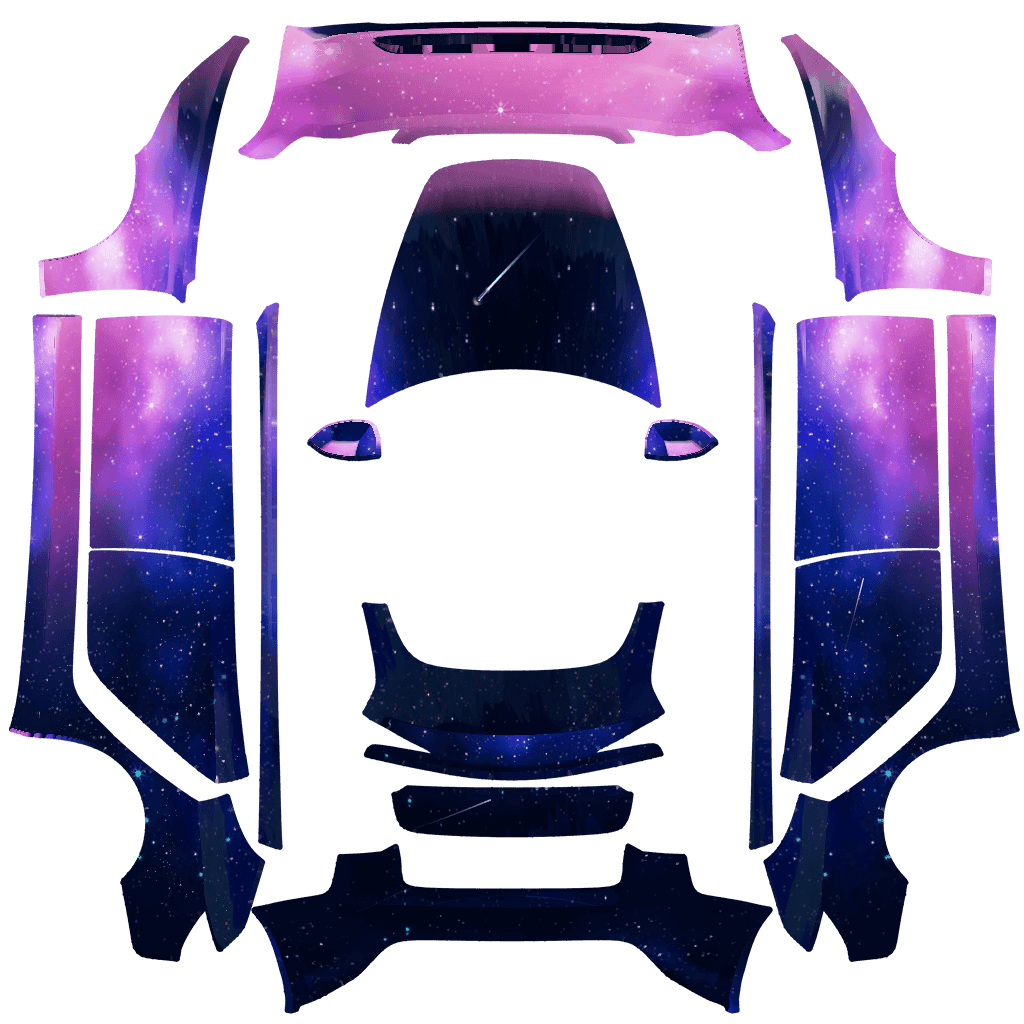
A flat design that looks complete on a monitor can be split by doors, wheel arches, and bumpers when mapped onto the 3D vehicle. The challenge is not filling the canvas. It is keeping the important graphic readable across curved surfaces and changing camera angles.
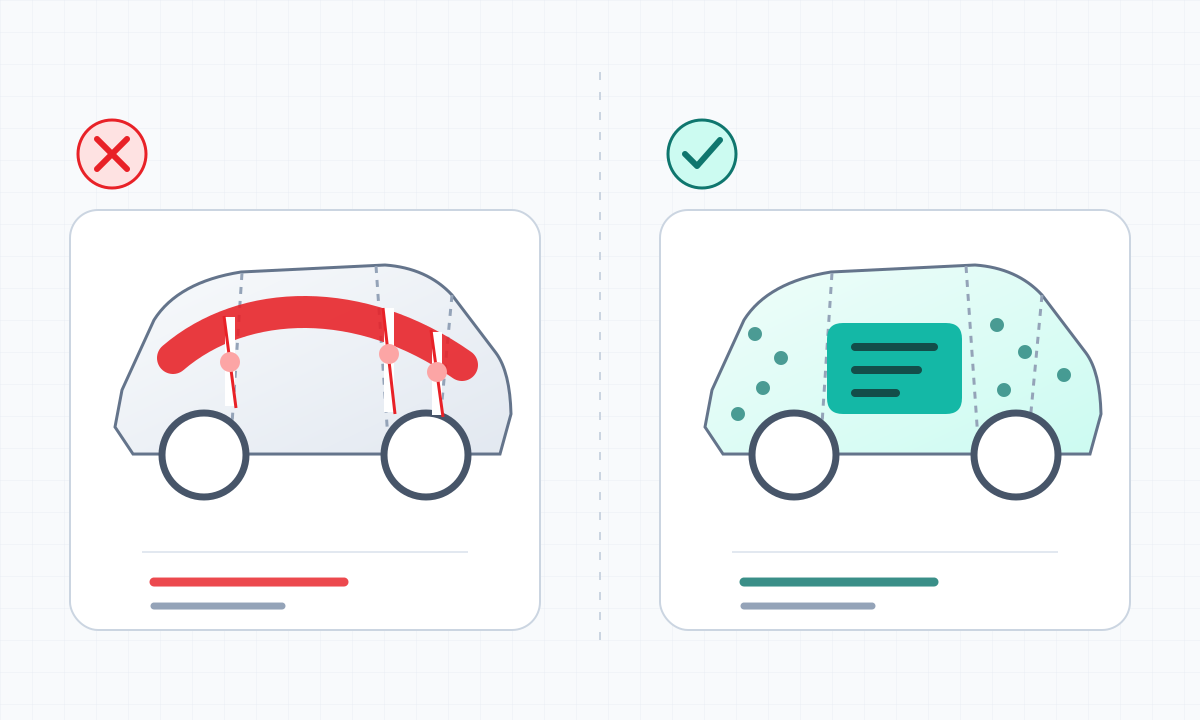
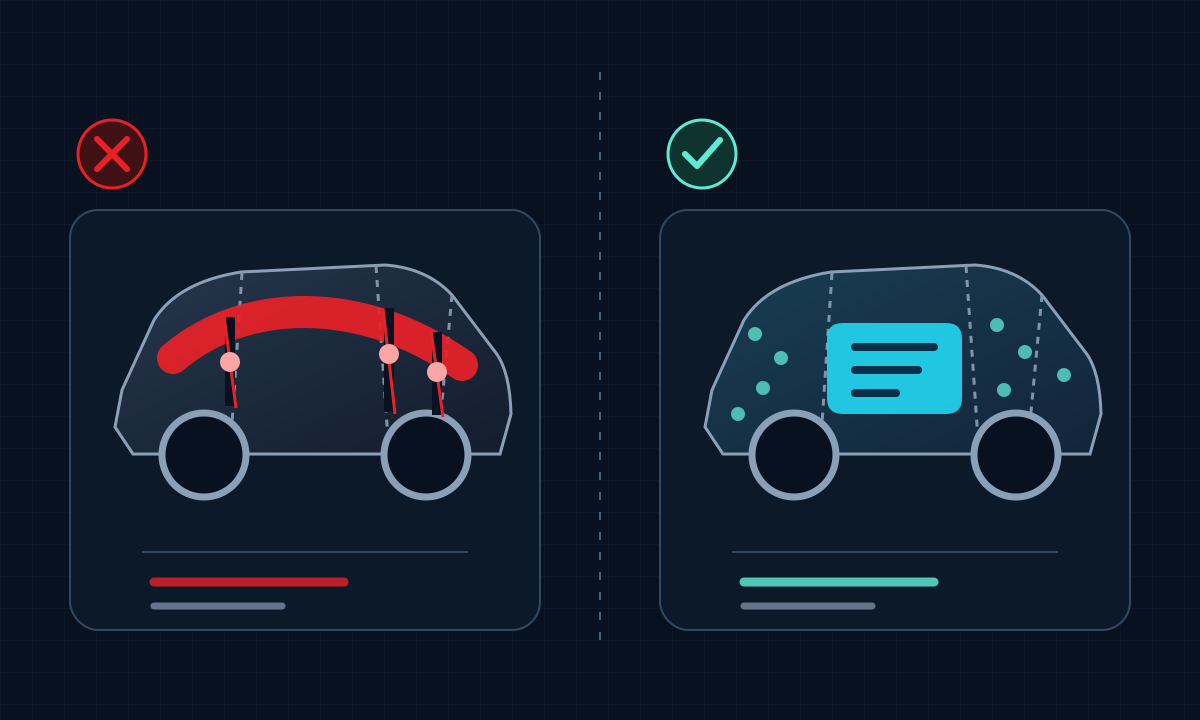
Treat body seams as composition boundaries. Place the primary visual first, then use secondary texture to connect regions instead of stretching a sentence or face across several parts.
The seam, scale, and preview method below is an editorial workflow derived from Tesla's public template structure and a repeatable body-map inspection process. It is not an official Tesla art specification and does not claim an in-vehicle test.
Evidence scope: this article is a desk review of Tesla's public manuals and template files. It does not claim an in-vehicle test unless one is explicitly documented.
Key takeaways
- Keep the primary graphic inside one continuous body region where possible.
- Build hierarchy with large color shapes before adding detail and texture.
- Do not resize, crop, or move the original template canvas.
- Review the exported design from several angles in the Paint Shop 3D view.
Read the body map before composing
Regions that touch on the flat file may not meet in the same way on the 3D model. Identify doors, front and rear fenders, the nose, rear, and roof before designing. Put elements that must remain recognizable on larger surfaces with less distortion.
Logotypes, faces, and centered geometry are sensitive to misalignment. Gradients, grain, and repeating patterns tolerate seams better, making them useful as connecting layers.
Design for touchscreen scale and contrast
The vehicle will not always appear at its largest size on the touchscreen. Fine lines, low-contrast type, and dense micro-patterns can disappear in a wider view. Establish the composition with two or three large color shapes before deciding which details add value.
- Make the primary graphic recognizable at thumbnail size.
- Give text a clear light-dark contrast instead of relying on a thin outline.
- Limit competing saturated colors so the design has one focal point.
- Check the silhouette in both thumbnail and close views.
Treat the original template as a fixed coordinate system
You can add layers, masks, and adjustments in the design file, but do not change the template's pixel dimensions, crop, or layer position. Changing the canvas moves the coordinates that correspond to the vehicle surface.
Keep one untouched copy of the blank template and separate the editable project from the final PNG. If a wrap is misplaced, this makes it easier to see whether a design layer moved or the source canvas changed.
Use a short export, preview, and correction loop
The first export is a spatial test, not the final file. Open it in Paint Shop and inspect the front quarter, side, rear quarter, and a wider view. Return to the source file and fix one visible issue at a time instead of changing color, position, and scale together.
- Check whether door and fender seams cut through the subject.
- Check whether graphics on the nose or rear reverse or stretch unexpectedly.
- Check both sides for accidental asymmetry.
- Finish by confirming PNG dimensions, the 1 MB limit, and filename rules.
Frequently asked questions
Why does a graphic look intact on the template but split in Paint Shop?
The flat image is mapped onto several 3D body parts. A graphic that crosses their boundaries can be divided by seams, distortion, and camera angle.
Can I enlarge the template canvas before exporting?
Keep the original template dimensions and coordinates. If a detail needs more clarity, change the artwork rather than resizing the entire body map.
Does the design need to look identical from every angle?
No. Prioritize a clear main view and protect the key message from seams, then use repeatable texture in transition areas.
Sources
Product features, file requirements, and vehicle directories are sourced from Tesla's first-party material where available. The interface may vary by region, configuration, and software version.
Template and Paint Shop content
Checks content against Tesla's public material, vehicle templates, and the site's real workflow without inventing individual expert identities.
Start on the correct blank file
Choose the matching vehicle template, protect the canvas, and export a Paint Shop-ready PNG.
Continue reading
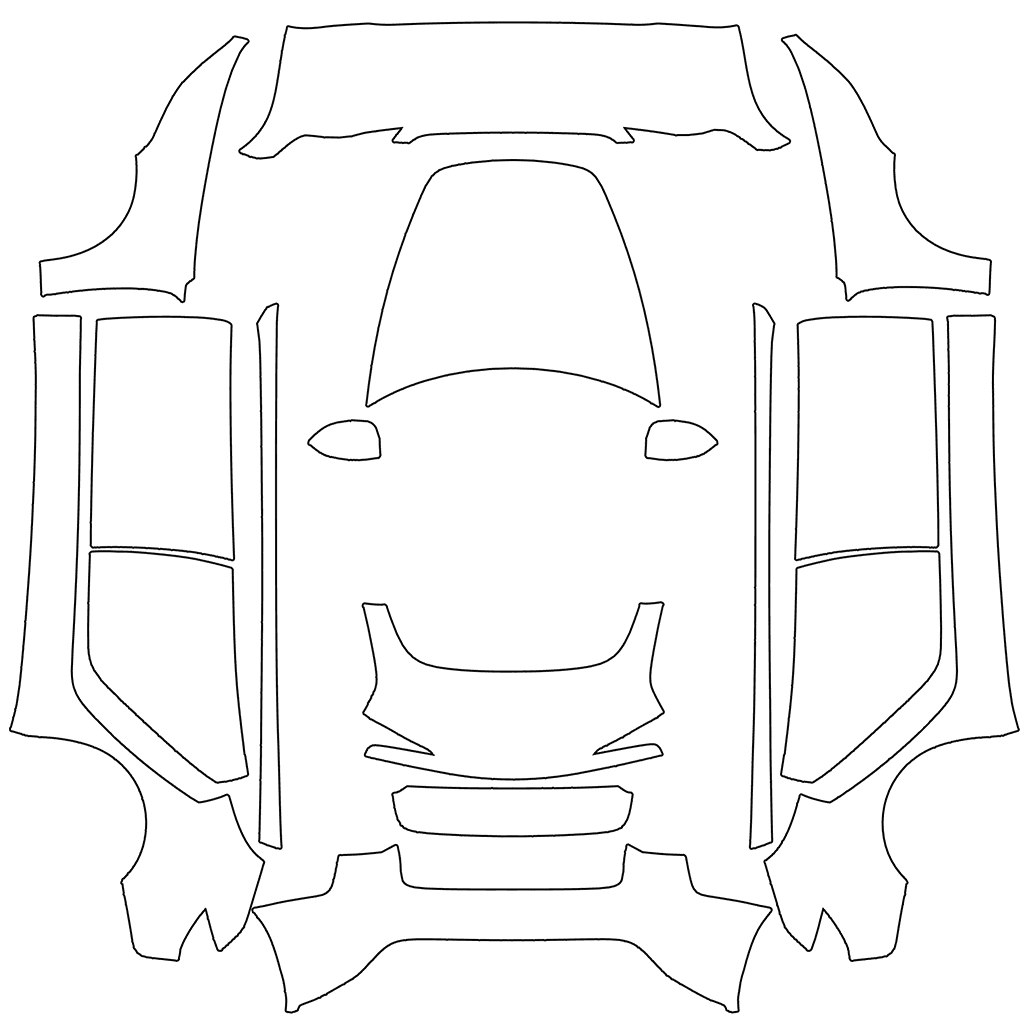
What do white and transparent areas mean in a Tesla wrap template?
Learn how to read the white editable regions and transparent canvas in an official Tesla Paint Shop PNG, preserve the alpha channel, find edge spill, and export without disturbing the body map.
Read article: What do white and transparent areas mean in a Tesla wrap template?
How to Build Seamless Patterns and Gradients for Tesla Paint Shop
Build seamless repeat tiles and gradients for Tesla Paint Shop: validate all tile edges first, then control scale, direction, and color transitions by body region.
Read article: How to Build Seamless Patterns and Gradients for Tesla Paint ShopHow to Place Text and Logos on a Tesla Paint Shop Wrap
Place text, logos, and marks on a Tesla Paint Shop design by choosing continuous body regions, setting readable scale and contrast, protecting clear space, and testing several 3D angles.
Read article: How to Place Text and Logos on a Tesla Paint Shop WrapHow to Choose the Right Tesla Paint Shop Template by Model and Year
Choose the correct Tesla Paint Shop template by model, year, and body variant, including legacy and 2024+ Model 3, 2025+ Model Y, Performance, Plaid, and Model Y L.
Read article: How to Choose the Right Tesla Paint Shop Template by Model and Year
What Is Tesla Paint Shop? Digital Wraps, Templates, and Physical Wraps
Tesla Paint Shop changes the 3D vehicle shown on your touchscreen, not the physical car. This introduction explains digital wrap PNGs, model templates, and feature availability.
Read article: What Is Tesla Paint Shop? Digital Wraps, Templates, and Physical Wraps